Email Marketing Strategies that Actually Convert in 2026
Email Marketing Strategies that Actually Convert in 2026
Email is not dead. In fact, in 2026, it remains the most powerful channel for generating revenue. Social media algorithms change daily, but your email list is the only asset you truly own.
However, the game has changed. What worked five years ago will send your emails straight to the spam folder today.
To succeed now, you need to move beyond basic newsletters. You need smarter, data-driven tactics.
This guide covers the definitive Email Marketing Strategies that drive real conversions in 2026. Whether you are a beginner or a pro, these steps will help you turn subscribers into loyal customers.
The State of Email Marketing in 2026
Before we dive into the strategies, we must understand the landscape. Inbox competition is fierce. The average person receives over 120 business emails a day.
To stand out, you cannot just be "noisy." You must be valuable.
Modern Email Marketing is about relevance, not volume. It is about sending the right message to the right person at the exact right moment.
If you blast the same generic message to everyone, you will lose. If you personalize and segment, you will win.
Let’s look at the specific strategies that are working right now.
1. Master the Art of Segmentation
The days of "batch and blast" are over. Sending the same email to your entire list is the quickest way to kill your open rates.
Segmentation is the foundation of high-converting Email Marketing Strategies.
You need to divide your audience into smaller groups based on specific criteria. This allows you to tailor your message so it feels personal.
Demographic Segmentation
Start with the basics. Group your subscribers by:
-
Age
-
Location
-
Gender
-
Job Title
Behavioral Segmentation
This is where the magic happens. Group users based on what they do:
-
Purchase History: What did they buy last? Recommend complementary products.
-
Email Engagement: Who opens every email? Who hasn't opened one in 3 months?
-
Website Activity: Did they visit your pricing page but not buy? Send them a discount.
By using behavioral data, you show your subscribers that you pay attention to their needs. This builds trust and skyrockets conversion rates.
2. Implement Hyper-Personalization with AI
In 2026, "personalization" means more than just putting the subscriber's first name in the subject line. That is the bare minimum.
True personalization uses Artificial Intelligence (AI) to predict what a user wants before they even know it.
Dynamic Content
Use dynamic content blocks in your emails. This allows you to show different images or text to different people within the same email campaign.
For example, a clothing brand can show men's winter coats to male subscribers in New York, while showing summer shorts to male subscribers in Florida.
Predictive Product Recommendations
AI tools can analyze past purchase behavior to predict future needs.
If a customer bought a coffee machine three weeks ago, AI can automatically trigger an email suggesting they restock on coffee beans today.
This level of relevance makes the email feel like a helpful service rather than a sales pitch.
3. The Rise of "Plain Text" Emails
We often think that beautiful, design-heavy emails convert better. Surprisingly, the data often says the opposite.
In 2026, there is a massive trend toward "plain text" or "minimalist" emails.
Why They Work
Plain text emails look like a message from a friend. They do not look like a corporate advertisement.
When an email looks like a glossy brochure, our brains immediately categorize it as "marketing" and put up a defense mechanism.
When an email looks like a simple letter, we read it.
How to Do It
-
Strip away the heavy graphics and logos.
-
Use a standard font size and black text.
-
Write in a conversational tone.
-
Focus purely on the copy and the value proposition.
Test this against your designed templates. You might be shocked to see that the ugly, simple email gets more clicks.
4. Optimize for Mobile First (Really)
Everyone says they optimize for mobile, but few actually do it well.
Over 70% of emails are opened on a mobile device. If your email looks bad on a phone, it is deleted instantly.
Short Subject Lines
Mobile screens cut off long subject lines. Keep your subject lines under 40 characters to ensure they are fully visible.
Big Buttons
Your Call-to-Action (CTA) buttons must be "thumb-friendly." Make them large, distinct, and easy to tap. Do not make users zoom in to click a tiny text link.
Single Column Layout
Never use multi-column layouts for mobile. They squash the text and make it unreadable. Stick to a clean, single-column design that scrolls naturally.
5. Focus on Zero-Party Data
Privacy laws are stricter than ever. Third-party cookies are disappearing. This makes "Zero-Party Data" incredibly valuable for Email Marketing.
Zero-Party Data is information that a customer intentionally shares with you.
How to Collect It
-
Surveys: Ask your new subscribers what they are interested in right away.
-
Preference Centers: Let users choose how often they want to hear from you and what topics they like.
-
Interactive Quizzes: Create a fun quiz related to your niche.
For example, if you run a fitness site, create a quiz called "What is your fitness style?" The answers will tell you exactly what kind of products to pitch to them later.
This data is accurate because it comes directly from the source. It allows for perfectly targeted campaigns that comply with all privacy regulations.
6. Automate Your Customer Journey
Automation is the secret to scaling your revenue without increasing your workload.
You should have "flows" set up that run in the background 24/7. These are automated sequences triggered by user actions.
The Welcome Series
This is the most important email you will ever send. Open rates for welcome emails are often 4x higher than regular newsletters.
Do not just send one email. Send a sequence of 3-5 emails:
-
Email 1: Deliver the lead magnet (PDF, discount, etc.) and welcome them.
-
Email 2: Share your brand story and values.
-
Email 3: Provide your best educational content.
-
Email 4: A soft sell or product recommendation.
The Cart Abandonment Flow
If someone adds a product to their cart but leaves, you must follow up.
Send a reminder 1 hour later. Then send another 24 hours later, perhaps with a small discount or free shipping offer. This simple strategy recovers lost revenue automatically.
The Re-Engagement Flow
If a subscriber hasn't opened an email in 90 days, trigger a re-engagement campaign. Ask them if they still want to hear from you.
If they don't respond, remove them from the list. It hurts your deliverability to keep inactive users.
7. Interactive Emails (AMP for Email)
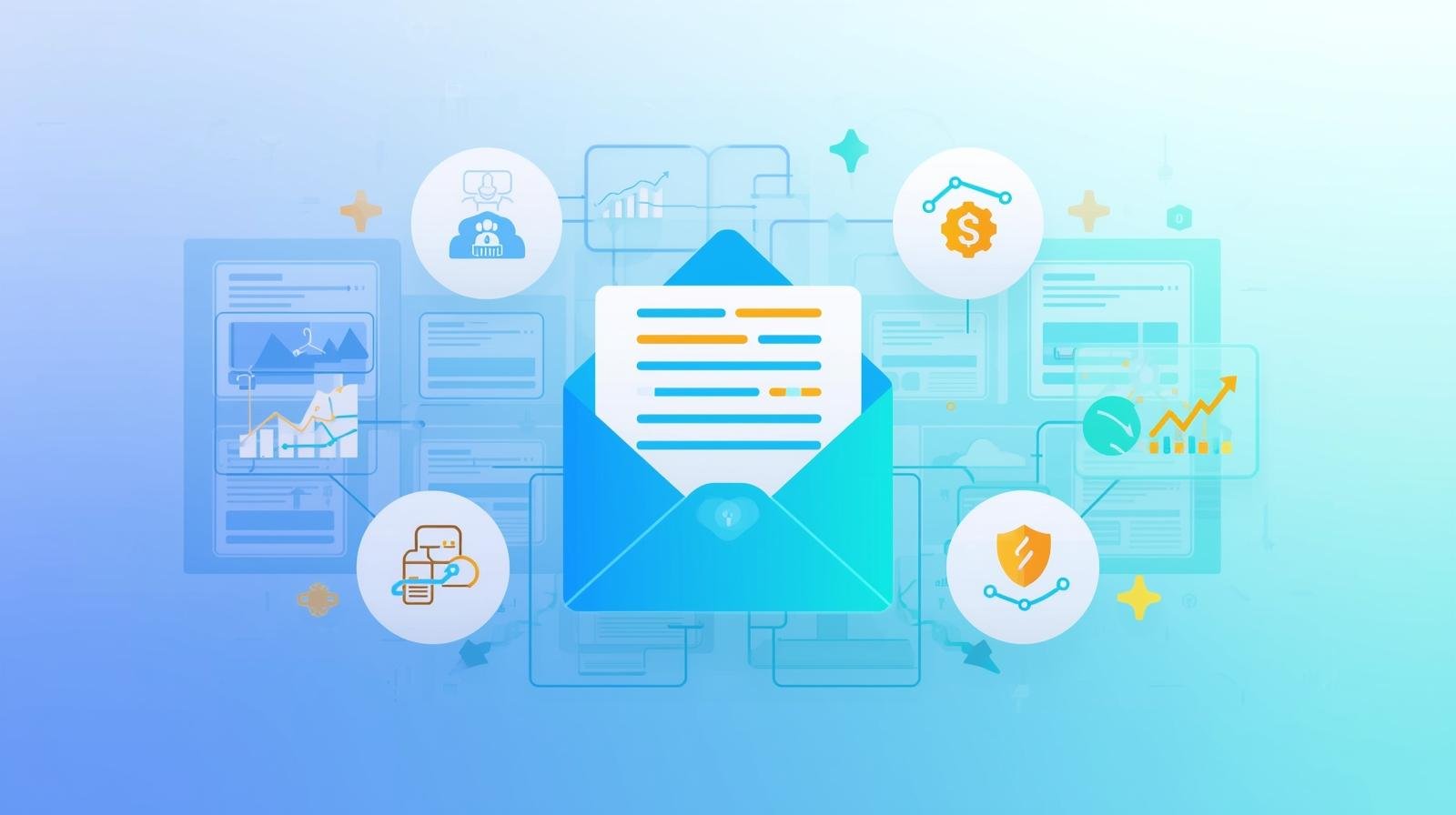
In 2026, users want to take action inside the email. They do not want to click a link, wait for a browser to load, and then act.
AMP (Accelerated Mobile Pages) technology allows you to put interactive elements directly in the inbox.
Examples of Interactivity
-
Forms: Let users fill out a survey without leaving the email.
-
Carousels: Let users swipe through product images directly in the email.
-
Scheduling: Let users book a meeting with you directly in the email calendar.
Removing the friction of clicking through to a website increases conversion rates significantly.
8. Nail the Subject Line and Preheader
Your subject line is the gatekeeper. If it fails, your amazing content is never seen.
Curiosity Gaps
Write subject lines that pique curiosity without being clickbait.
-
Bad: "New Update Available."
-
Good: "The one change that doubled our traffic..."
The Preheader Text
This is the snippet of text shown next to the subject line in the inbox. Do not waste it.
Use it to support the subject line. If the subject line asks a question, the preheader should hint at the answer.
9. Scrub Your List Regularly
A massive email list is useless if half the people are inactive.
Internet Service Providers (ISPs) like Gmail and Outlook look at your engagement rates. If you send emails to 10,000 people and only 50 open them, Gmail assumes you are spam.
They will then start sending your emails to the spam folder for everyone—even your loyal fans.
The Cleaning Process
Every 3 to 6 months, remove cold subscribers.
-
Identify users who haven't opened in 6 months.
-
Send a final "Do you want to stay?" email.
-
Delete anyone who doesn't click "Yes."
A smaller, engaged list is far more profitable than a large, dead list.
10. Integrate Email with SEO
Email and SEO are best friends. They feed into each other.
You need traffic to grow your email list. The best source of consistent, high-quality traffic is organic search (SEO).
By creating high-value content on your blog that ranks well on Google, you attract people who are actively looking for solutions. These are the best email subscribers.
Once they are on your list, you use email to drive traffic back to your new blog posts. This signals to Google that your content is popular, which helps your SEO rankings even more. It is a virtuous cycle.
To master the art of bringing organic traffic to your site so you can convert them into subscribers, you need a solid SEO strategy. You can learn more about optimizing your digital presence at SimplSEO.
11. Use Social Proof and Urgency
Psychological triggers are powerful in Email Marketing Strategies.
Social Proof
Include reviews and testimonials in your emails. When you pitch a product, show a quote from a happy customer right below the buy button.
"Over 5,000 marketers use this tool" is a powerful statement. It tells the reader they are missing out if they don't join.
Urgency and Scarcity
Give people a reason to act now.
-
"Sale ends in 4 hours."
-
"Only 3 spots left."
However, be honest. Fake urgency destroys trust. If you say the sale ends tonight, it must end tonight.
12. A/B Testing Everything
You never truly know what works until you test it.
In 2026, A/B testing is easier than ever. Most email platforms automate this.
What to Test
-
Subject Lines: Test a question vs. a statement.
-
Send Times: Test Tuesday morning vs. Thursday afternoon.
-
CTAs: Test a red button vs. a green button. Test "Buy Now" vs. "Get Started."
Run the test on a small portion of your list (e.g., 20%), see which one wins, and then send the winner to the remaining 80%.
13. Double Opt-In is Essential
Many marketers skip double opt-in because they fear it slows down list growth.
In the long run, single opt-in hurts you. It fills your list with bots, typos, and fake emails.
Double opt-in ensures that every email on your list is valid and belongs to a real person who actually wants to hear from you. This protects your sender reputation and keeps your delivery rates high.
14. Storytelling Over Selling
People buy from people, not faceless corporations.
Your emails should tell a story. Share your failures, your lessons, and your journey.
When you share a vulnerability, you build a connection. When you eventually ask for a sale, the subscriber is much more likely to buy because they like you.
Don't just say "Buy this course." Say, "Here is how I struggled for 3 years, and here is the system I finally built to fix it. You can have it too."
Conclusion: Consistency is Key
There is no magic bullet in Email Marketing. The secret is consistency.
You must show up in your subscribers' inboxes regularly with value. If you only email them when you want to sell something, they will unsubscribe.
Treat your email list like a relationship. Give more than you take.
By implementing these Email Marketing Strategies—segmentation, personalization, plain text, and automation—you will build a list that not only converts but becomes the most valuable asset in your business.
Start cleaning your list today. Set up your welcome flow tomorrow. And keep testing. The results will follow.
Popular Tools
Recent Posts